Few genres rely so heavily on emotional subtlety as techno. Beneath its grid-like structures and unrelenting pulse lies a world of harmonic detail, often driven by one of the simplest yet most evocative building blocks in Western music: the minor chord.
For decades, producers have used this small triad to inject mood, depth, and tension into an otherwise mechanical form. The results range from brooding warehouse anthems to ethereal melodic odysseys. Understanding how and why the minor chord works is less about textbook theory and more about how emotion interacts with sound design — and that’s where the heart of techno truly lies. The right synth matters too – see our top 7 synth plugins for techno pads.
The Theory in Practice
At its most fundamental level, a minor chord (or minor triad) consists of three tones: the root, a minor third (three semitones above the root), and a perfect fifth (seven semitones above).
That one-semitone drop between the major and minor third is what changes everything. It removes brightness and introduces introspection — the difference between celebration and contemplation. In E minor, for example, E–G–B gives us that quintessentially moody color so often heard underpinning pads and drones in melodic techno.
Table 1: Construction of Common Minor Triads
| Chord | Notes | Interval Structure | Mood Description |
|---|---|---|---|
| A minor | A – C – E | 1, ♭3, 5 | Warm, inward-looking |
| B minor | B – D – F# | 1, ♭3, 5 | Deep, reflective |
| C minor | C – E♭ – G | 1, ♭3, 5 | Classical melancholy |
| D minor | D – F – A | 1, ♭3, 5 | Somber, serious |
| E minor | E – G – B | 1, ♭3, 5 | Mysterious, cinematic |
| F# minor | F# – A – C# | 1, ♭3, 5 | Brooding, modern |
| G minor | G – B♭ – D | 1, ♭3, 5 | Lush, emotional |
The intervalic relationship here is universal — it’s the sound design, performance, and harmonic context that make each chord feel unique. Played on a sawtooth pad with long release, it’s cinematic. On a filtered square wave with subtle distortion, it’s dark and industrial.
Why Techno Lives in the Minor
It’s not difficult to see why techno gravitates toward minor tonalities. The genre’s architecture — repetitive rhythms, evolving textures, and gradual build-ups — leaves little room for overt melody. Harmonic shifts must do more with less, and minor chords offer the emotional weight to make that work.
D minor and E minor are particularly common choices. The former’s gravity suits deep, minimal techno, while the latter offers just enough clarity for melodic or progressive variations. Even within upbeat tempos, minor chords provide a duality: energetic yet introspective, mechanical yet human.

Progressions that Define the Sound
While techno often relies on static harmony — sometimes a single chord held for several minutes — the way those chords interact over time is what gives each subgenre its flavor. The following progressions are central to the genre’s harmonic vocabulary.
Table 2: Notable Minor Progressions in Techno and Electronic Music
| Progression | Roman Numerals | Example Key | Used By / In | Emotional Effect |
|---|---|---|---|---|
| Lament Sequence | i – VII – VI – V | E minor → Em–D–C–B | Cedric Gervais – “Summertime Sadness (Remix)” | Downward, cinematic tension |
| Melodic Cycle | i – VI – III – VII | B minor → Bm–G–D–A | Stephan Bodzin, Tale of Us | Expansive and hypnotic |
| Static Harmony | i – (repeat) | D minor → Dm | Recondite, Deepchord | Minimalist, evolving texture |
| Dream Loop | i – v – VI – iv | A minor → Am–Em–F–Dm | Ben Böhmer, Nils Hoffmann | Lush and emotional |
| Industrial Pulse | i – VII | A minor → Am–G | Charlotte de Witte, Amelie Lens | Raw, relentless drive |
| Cyclic Uplift | i – VI – III – VII – i | G minor → Gm–Eb–Bb–F–Gm | Anyma, Monolink | Progressive and cinematic |
What’s interesting here is how each progression manipulates emotional perception through context. The Lament Sequence’s descending motion feels heavy, while the Melodic Cycle loops upward, giving a sense of motion and anticipation — perfect for long-format arrangements.
From Notes to Noise: Sound Design and Delivery
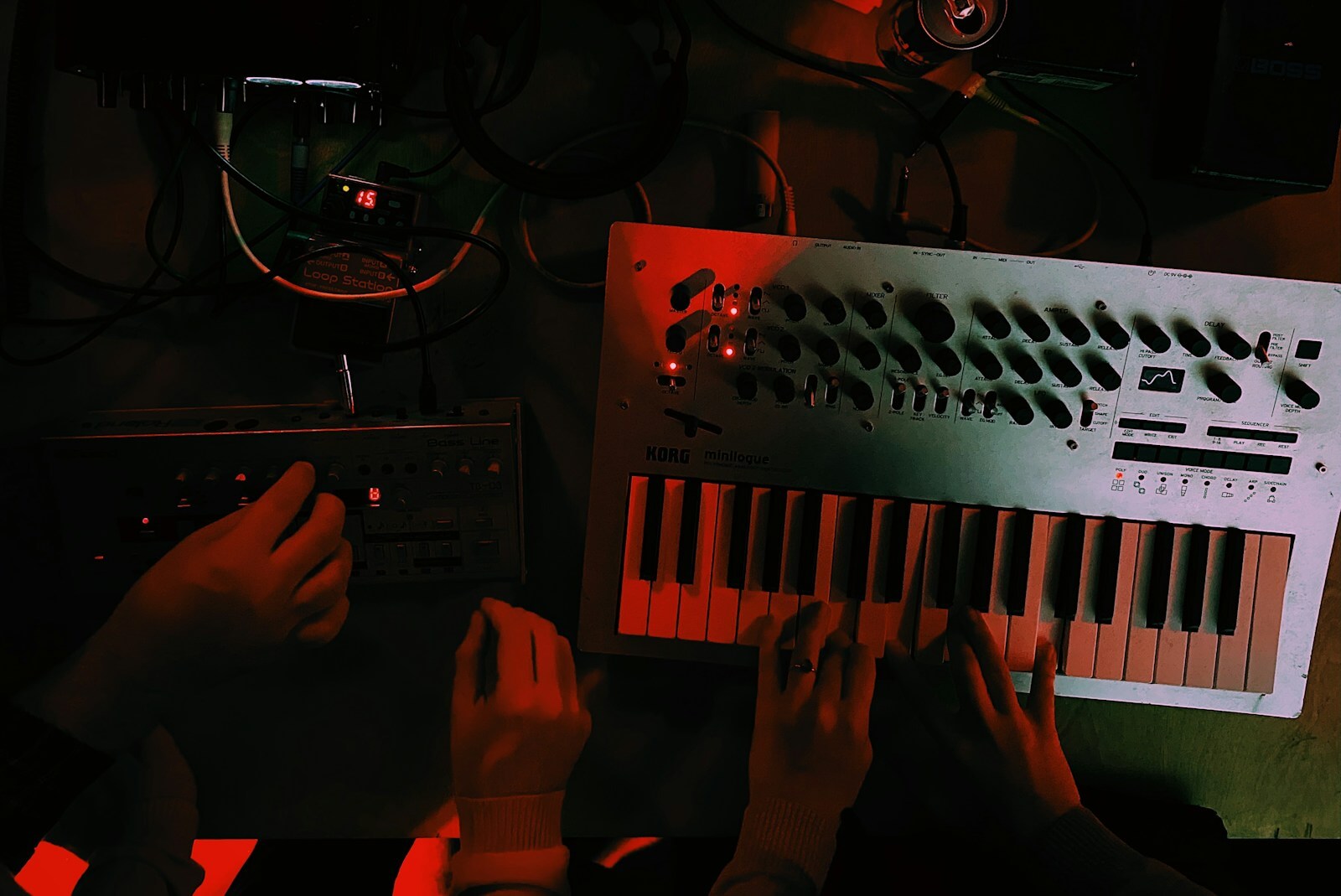
A chord’s emotional power in techno rarely comes from its notes alone — it’s how those notes are presented. Pad synths such as u-he Diva, Arturia Pigments, and Dune 3 (all available on Plugin Boutique ) are frequent choices among producers for their harmonic richness and modulation depth.
A simple E minor pad, when layered with automation — filter sweeps, panning shifts, reverb expansion — transforms into a living, breathing texture. Minor chords are also highly effective for arpeggiated sequences. Played through plugins like Pigments or Vital, a basic triad becomes a rhythmic engine driving the track’s atmosphere.
Automation plays a central role here. Gradually opening a low-pass filter or increasing delay feedback across eight or sixteen bars can make even a single sustained chord feel like an entire narrative unfolding.
Learning Through Interaction
For those less fluent in chord theory, hands-on exploration remains the best teacher.
The Compact Piano with Chord Assistant offers an intuitive way to experiment with minor chords and progressions, visualizing their structure while hearing the harmonic outcome instantly.
Its MIDI export capability allows users to send chords directly to their DAW, making it not only a learning tool but a production aid. Experimenting with inversions or extending chords to 7ths and 9ths can reveal just how subtle changes alter a track’s emotional character.
Emotion Through Repetition
The beauty of techno lies in its repetition — the way a single chord or motif, repeated endlessly, can evolve into something deeply emotional. Minor chords are the conduit for that transformation.
They don’t demand attention; they suggest emotion. They let the machines speak in human tones. In the hands of a skilled producer, even a static D minor pad can feel like it’s breathing — expanding and contracting with every beat.
The minor chord remains, as ever, the genre’s emotional anchor: simple, versatile, and endlessly expressive.

Further Listening & Reading
- The Secrets of Techno Production – a foundation on chord theory and pad design