You know what you're aiming for: a soft electric piano, a loop that never quite lands, a beat that sits a little behind the grid. Then you sit down to write the lofi chords and it comes out sounding wrong. It's too tidy and too finished.
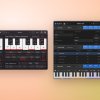
But we can fix that once we learn that lofi harmony runs on a handful of methods, and once you can hear them you can use them. Below are five loops to start from. The piano on this page already has the first one loaded. Press Play it, then play along on your keyboard, your computer keys or a MIDI keyboard.
Smart Piano Studio
Play the keys, pick chords below, then loop them or record a song.
← → octave · ↑ ↓ softer / louder · hold Space for sustain
Turn your phone sideways to see more keys.
HD orchestral sounds: VSCO 2 Community Edition by Versilian Studios (CC0)
Concert Grand: Salamander Grand Piano by Alexander Holm, CC BY 3.0, edited
Chord Assistant Tap a chord to hear it, + to add it to your progression
Like building progressions? Scaler 3 and Chord Prism 2 do this inside your DAW. Compare them →
Want a grand piano like this in your own music software? Addictive Keys vs Keyscape →
Playing on a real keyboard? Hear what a $99 sampled piano adds. Studio Grand review →
Got an idea down? Next, turn it into a full song. How to structure a song →
Recording
🎹 Five lofi chord progressions to play right now
Each Load this loop link puts the chords, tempo and sound into the piano above. Nothing to download.
1. The slow fall: Fmaj7 – Em7 – Dm7 – Cmaj7
Four chords walking down the C major scale one step at a time, IV to iii to ii to I. Every chord is a 7th, so every chord has a soft edge. The loop arrives home on Cmaj7, but the major 7th on top keeps even the home chord a little unsettled. That is the lofi feeling in one loop: resolved, but not quite.
👉 Load this loop · 75 BPM, one bar per chord
2. The jazz turnaround: Cmaj7 – Am7 – Dm7 – G7
I, vi, ii, V. Jazz players use this to circle back to the start of a tune. G7 at the end pulls hard towards Cmaj7, so the loop always wants to go round again. Slow it down, play it on electric piano, and it stops sounding like a jazz standard and starts sounding like a study stream.
👉 Load this loop · 80 BPM, one bar per chord
3. The ii–V–I with 9ths: Dm9 – G9 – Cmaj9
The most common move in jazz harmony, with one more note stacked on each chord. A 9th adds colour without adding tension. Five notes per chord sounds lush on an electric piano, and it fills the space a lofi track usually leaves empty. Three chords, so the loop has an odd, lopsided length. That is part of the charm.
👉 Load this loop · 72 BPM, one bar per chord
4. The minor drift: Am7 – Fmaj7 – Dm7 – Em7
A minor, natural minor scale: i, VI, iv, v. The last chord is the giveaway. A classical piece would use E7 here, with a G sharp that drags you back to A minor. Em7 keeps the G natural, so there is no drag. The loop just drifts back round. Rainy-window music.
👉 Load this loop · 78 BPM, one bar per chord
5. The two-chord loop: Ebmaj7 – Dm7
Two chords from B flat major, IV and iii, two bars each. Nothing resolves. Nothing needs to. With so little moving in the harmony, all the interest goes to your melody and your drums, which is exactly where lofi producers want it.
👉 Load this loop · 70 BPM, two bars per chord
🌀 What makes chords sound lofi
Play a plain C major triad, then Cmaj7. Same chord, one extra note. The triad sounds like a full stop. The 7th sounds like a comma.
That is most of the secret. Lofi chords are almost always 7ths and 9ths, chords with an extra note or two that keep them from sounding final. The rest comes from how they are played:
- Slow tempos. Most lofi sits somewhere around 70 to 90 BPM. All five loops above are in that range.
- Close voicings. The hands barely move from chord to chord. In the piano above, set Voicing to Smooth and the tool picks the nearest notes for each chord for you. The five loops are already set that way.
- Warm keys. Electric Piano 1 in the sound menu is the closest to the Rhodes-style keys on most lofi tracks.
- Loops that do not resolve. Notice how many of the loops above end somewhere other than home. That restlessness is what lets a track play for an hour without feeling finished.
The swing, the vinyl texture and the tape wobble happen later, in your DAW. My Producer's Guide to Authentic LoFi covers all of that.
⚙️ Make your own lofi progression
- In the Chord Assistant, set Chords to 7ths (or 9ths) and Voicing to Smooth.
- Pick a key. Tap the chord buttons to hear them, and press + on the ones you like.
- Press Play loop. Set the tempo to around 75 and listen to it go round a few times.
- Swap one chord at a time until the loop feels right. If it sounds too finished, end on something other than chord I.
- Record a melody over it in the Recording panel, then export the MIDI file and drag it into your DAW.
Found one you like? Press Share and you get a link that opens your loop, ready to play, for anyone you send it to.
Stuck playing the same three chords? Breaking the 3 Chord Habit has more ways out. If you would rather have a plugin suggest chords inside your DAW, I compare the main options in Best Chord and Melody Plugins.
🧭 Quick FAQs
What key is lofi usually in?
Any key works. The chord types and the tempo do far more for the sound than the key does. Change the Key in the piano above and every chord button moves with it.
Do I need to know music theory to write lofi chords?
No. The Chord Assistant only shows chords that belong to the key you picked, so every combination works together. Start from one of the loops above and change one chord.
Can I use these chord progressions in my own tracks?
Yes. Common progressions like these are shared by thousands of songs and are not treated as anyone's property. What you play over them is yours.
How do I get the chords into my DAW?
In the Recording panel, add your progression as the chord track, record a melody over it if you like, then press Export MIDI. It opens in Ableton, FL Studio, Logic, Reaper and any other DAW.
🎁 Want more loops to try? Download my free PDF, 10 Lofi Chord Progressions for Chill Beats. Every chord comes with a keyboard diagram, so you can play them on the piano above or copy them into your DAW.